- Spanish-Latin America
- Japanese-JP
- Chinese
- Europe
- Português-BR

Tech Support
(888) 598-9901
Hours: Mon-Fri 8AM-8PM EST
nep-usa@site_ea168614-f5f4-4298-bd5b-880b4cf8d99d
Why Choose a Die Cutting Machine for Your Business?
Why choose a Die Cutting Machine when manual cutting still appears cheaper? The answer becomes clearer on a busy production floor. A machine cuts repeated shapes accurately, handles thicker materials, and reduces inconsistent edges. It can process cartons, labels, foam, leather, and protective inserts with less handling. That consistency protects brand presentation and reduces avoidable material waste.
Smithers’ report, The Future of Global Packaging to 2028, projects the global packaging market will exceed $1.2 trillion by 2028. This growth increases pressure on converters to improve speed, flexibility, and repeatability. PMMI’s 2024 State of the Industry report also identifies automation as a major investment priority across packaging operations. A Die Cutting Machine supports that shift through programmable settings, faster changeovers, and integration with feeding or finishing equipment. Measure it carefully.
Jean-Pascal Bobst, CEO of Bobst Group, has described the industry’s direction with a useful warning: “The future is connected.” His view reflects modern production realities. Equipment must connect data, operators, quality checks, and downstream processes. A machine that only cuts quickly may still create bottlenecks. That is the part many buyers overlook.
The strongest business case combines output, labor savings, accuracy, maintenance, and energy use. It also considers operator training and floor space. Not every company needs the most automated model. Sometimes, a simpler machine is wiser. However, choosing only by purchase price can be a costly mistake. A practical evaluation should compare total ownership cost, expected production volume, material range, and service support before investment.
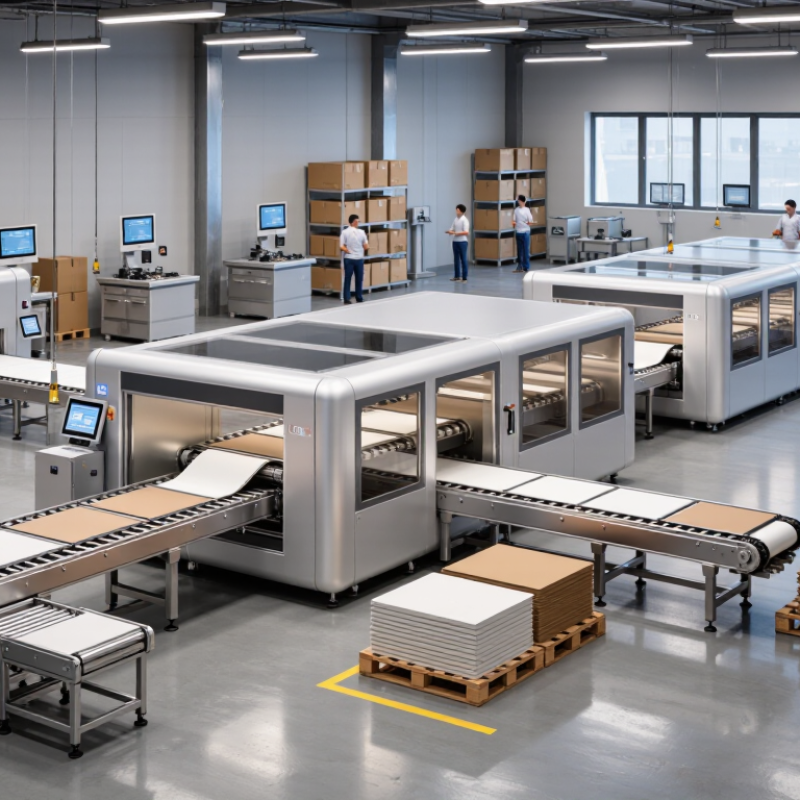
Define Die Cutting: Flatbed, Rotary, and Digital Machine Types
Why Choose a Die Cutting Machine for Your Business?
Die cutting shapes materials with a formed blade, creating repeatable pieces for packaging, labels, seals, and displays. The right machine depends on material thickness, order volume, shape complexity, and finishing needs. In production work, small setup decisions often affect waste more than expected. A few millimeters can change the result.
Flatbed die cutting uses a flat platen that presses a shaped die through the material. It suits thicker boards, foam, leather, and short or medium production runs. Operators can adjust pressure and registration carefully. Rotary die cutting uses a cylindrical die that turns continuously against the material. It supports faster roll-fed production and consistent output. Thin films, labels, tapes, and flexible packaging often benefit from this process. However, rotary tooling can require higher preparation costs.
Digital die cutting uses a computer-controlled blade instead of a fixed die. It handles prototypes, personalized orders, and changing designs with little tooling delay. Digital systems can cut intricate outlines, but blade wear and slower speeds may affect large runs. I have seen teams choose digital equipment too quickly, then struggle with thick stock and uneven edges. Testing several materials is essential. Do not trust the sample alone. Check dust, curl, registration, and edge quality after extended running. A practical choice weighs machine capability against daily workflow, operator skill, and realistic order forecasts.
Get in touch
Our mission is to develop cutting-edge clean energy technology and provide next-generation solar inverters.
Phone
(888) 598-9901
nep-usa@site_ea168614-f5f4-4298-bd5b-880b4cf8d99d
