- Spanish-Latin America
- Japanese-JP
- Chinese
- Europe
- Português-BR

Tech Support
(888) 598-9901
Hours: Mon-Fri 8AM-8PM EST
nep-usa@site_ea168614-f5f4-4298-bd5b-880b4cf8d99d
What Is a Modern Walk In Wardrobe?
A modern walk-in wardrobe is more than an attractive room filled with shelves. It is a carefully planned storage system that supports daily routines, protects clothing, and makes dressing feel less rushed. Interior designer and closet specialist Lisa Adams captures this principle clearly: “A closet should be designed around the way you live.”
That idea sounds simple. It is not always easy.
A successful modern walk-in wardrobe begins with real habits. Do you fold knitwear, hang most shirts, or store shoes in boxes? The answers determine shelf heights, hanging zones, drawers, and lighting. Adjustable shelving can accommodate changing needs. Full-height hanging rails use vertical space effectively. Soft-close drawers protect delicate items and reduce unnecessary noise.
Materials matter too. Matte finishes can hide fingerprints, while warm wood tones create a calmer atmosphere. Motion-activated LED lighting should illuminate corners, not only the centre of the room. A narrow bench, full-length mirror, and clear walkway can improve the experience considerably.
Still, perfection is not the goal. A highly polished wardrobe may fail if it ignores clutter, laundry habits, or future changes. This is where professional planning becomes valuable. Designers can assess circulation, storage capacity, ventilation, and accessibility before installation begins.
The best modern walk-in wardrobe feels personal, practical, and quietly dependable. It should make everyday choices easier. Sometimes, that means leaving a little empty space.
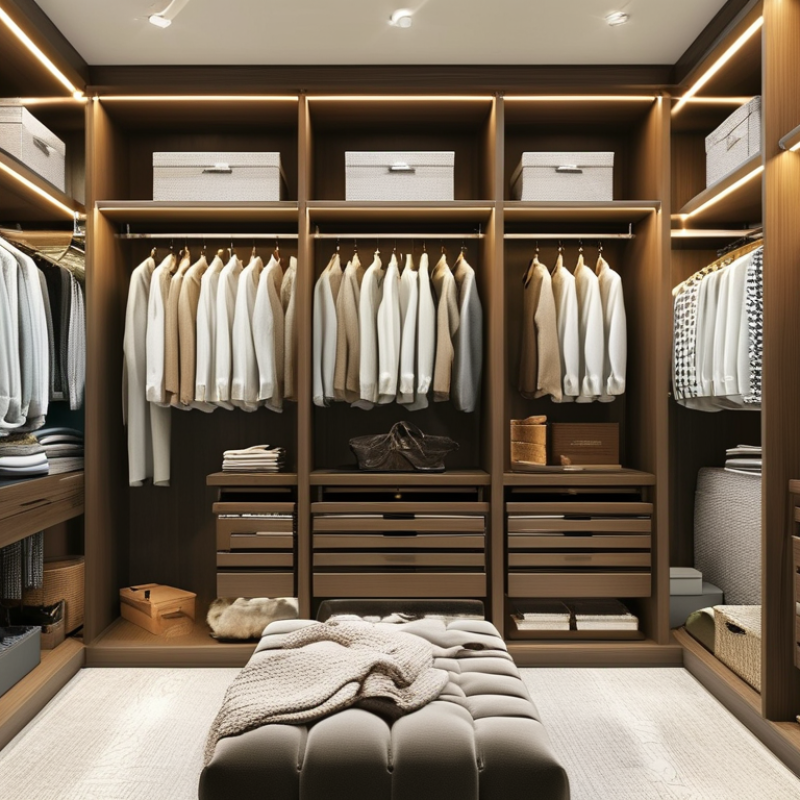
Definition and Core Features of a Modern Walk-In Wardrobe
What Is a Modern Walk In Wardrobe?
A modern walk-in wardrobe is a dedicated dressing space with organized storage, clear movement, and practical lighting. It is more than a room filled with shelves. The layout should support daily routines, from choosing clothes to storing shoes and accessories. In practice, a comfortable walkway often needs about 90 centimetres of clear space. This allows drawers and doors to open without blocking movement.
Core features include adjustable shelving, hanging rails at different heights, and full-length storage for coats or dresses. Drawers help protect smaller items from dust and visual clutter. Soft, even lighting improves colour accuracy when selecting clothes. Ventilation also matters, especially in enclosed rooms where humidity may affect fabrics. Durable surfaces are useful, but they should still feel comfortable and easy to clean.
A modern design should respond to the user, not follow a fixed template. Someone with many folded garments may need deeper shelving, while another person may prefer open hanging space. I have found that overly ambitious layouts can become awkward in real use. A narrow passage feels frustrating when several drawers are open. That detail is easy to miss during planning. Materials, lighting controls, and storage heights should also support accessibility and future changes. Even a small bench or mirror can make the room feel more useful. The best solution is not always the most expensive one.
Get in touch
Our mission is to develop cutting-edge clean energy technology and provide next-generation solar inverters.
Phone
(888) 598-9901
nep-usa@site_ea168614-f5f4-4298-bd5b-880b4cf8d99d
