We use our own and third-party cookies to improve our services. If you continue browsing, we will consider that you accept this use. Read More

OK

English-US
  • Spanish-Latin America
  • Japanese-JP
  • Chinese
  • Europe
  • Português-BR

Tech Support

(888) 598-9901
Hours: Mon-Fri 8AM-8PM EST

E-mail

nep-usa@site_ea168614-f5f4-4298-bd5b-880b4cf8d99d

What Are the 2026 Top Polypropylene Pipe Types?

In 2026, polypropylene piping continues to attract attention in residential, commercial, and industrial projects. Its low weight, corrosion resistance, and heat-welded joints make it practical for many installations. Yet one type rarely fits every system. Temperature, pressure, fluid chemistry, installation space, and maintenance plans all influence the right choice.

This guide examines the leading Polypropylene Pipe types expected to remain important in 2026, including PP-R, PP-RCT, PP-H, and PP-B. Each material has different strengths. PP-R often supports hot and cold water networks, while PP-RCT can offer improved pressure performance at elevated temperatures. PP-H is commonly considered for chemical handling and industrial drainage. PP-B may suit specific low-temperature or drainage applications. These are useful patterns, not universal rules.

Real installation experience also matters. A clean fusion joint should show an even bead, without burned material or visible gaps. Poor alignment can create trouble long after the pipe is buried. Manufacturer data, recognized testing standards, and local project requirements should guide final selection. Product labels alone are not enough. Engineers and installers should check pressure ratings, wall thickness, thermal expansion, joining procedures, and service temperatures.

No ranking is perfect. Market preferences differ by region, supplier quality, and project budget. Some newer products may look promising but lack long-term field evidence. This overview therefore compares practical performance with documented technical information, helping readers make a more careful and defensible decision.
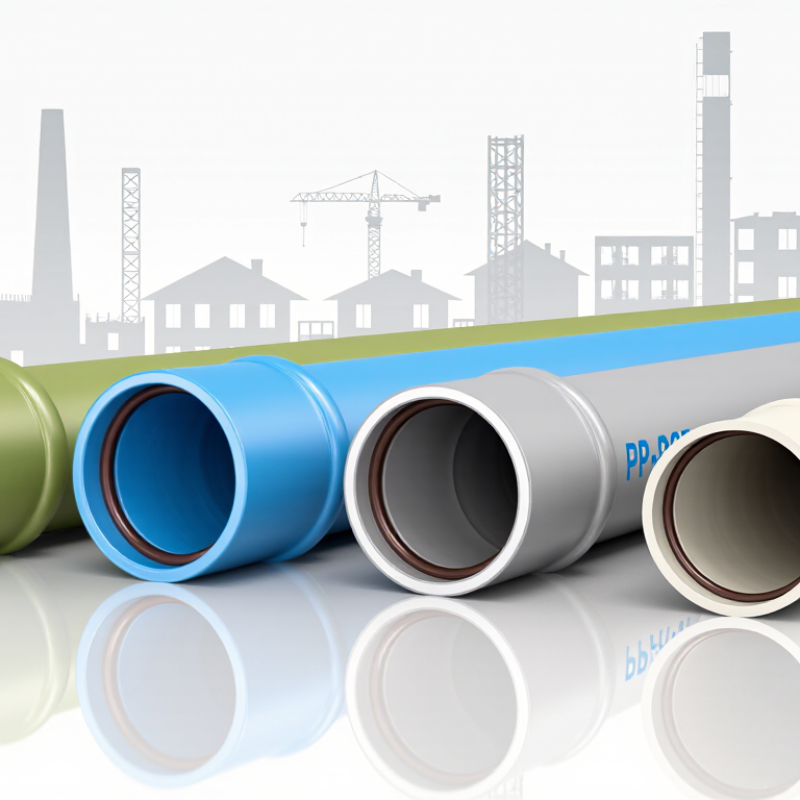
What Are the 2026 Top Polypropylene Pipe Types?

2026 PP Pipe Landscape: Polymer Grades, Standards, Pressure, and Use

What Are the 2026 Top Polypropylene Pipe Types?

The 2026 PP pipe landscape is shaped by polymer grade, pressure rating, and installation conditions. PP-R remains common in hot and cold water systems. It offers smooth internal surfaces and reliable heat resistance. PP-RCT extends performance at elevated temperatures through improved crystallinity. It can support thinner walls, but only when design calculations allow it. PP-H is often selected for chemical process lines, industrial drainage, and demanding fluid service.

Standards make these choices measurable. ISO 15874 covers polypropylene piping systems for hot and cold water installations. Other projects may follow regional pressure, fire, potable-water, or chemical-resistance requirements. Always check the applicable edition and local code. A pipe marked with a nominal pressure value does not guarantee that rating at every temperature. Temperature reduces allowable pressure. Wall thickness, SDR, joint quality, and operating cycles matter too.

Use should guide selection. A residential riser may need PP-R with thermal expansion control. A factory line may require PP-H after reviewing chemical concentration and temperature. PP-RCT can reduce material use, though thinner walls demand careful handling. I have seen specifications focus heavily on pressure and overlook support spacing. That is a costly gap. Fusion joints also need clean surfaces, correct heating time, and trained installers. The process sounds simple. It is not always forgiving.

PP-R Pipes: ISO 15874 Hot-and-Cold Water Ratings at 70°C

PP-R pipes remain a leading polypropylene choice for domestic hot and cold water. Under ISO 15874, Application Class 2 addresses hot-water service at 70°C. The classification also considers operating cycles, pressure, and service life. It is not simply a “70°C pipe” label. A neat label can still mislead.

ISO 15874 uses a long-term design approach, commonly linked with a 50-year service expectation under defined conditions. Actual pressure capacity depends on pipe dimensions, wall thickness, temperature, and the manufacturer’s verified stress data. At 70°C, polymer strength decreases compared with cold-water service. Installers should therefore check the pressure-temperature table, not only the nominal PN value. I would not specify PP-R from temperature alone.

Independent data also supports careful material selection. PlasticsEurope’s Plastics—The Fast Facts 2024 reports global plastics production at about 414 million tonnes in 2023. This scale makes traceability and responsible material use increasingly important. A 2024 European piping-sector outlook identifies energy-efficient water systems and durable polymer networks as continuing demand drivers. In practice, PP-R needs clean fusion surfaces, correct heating time, and controlled pipe alignment. Poor workmanship remains a weak point. Even compliant material can fail early when supports, expansion allowance, or joint preparation are ignored.

PP-RCT Pipes: ASTM F2389 Pressure Design and Creep Resistance

What Are the 2026 Top Polypropylene Pipe Types?

PP-RCT Pipes: ASTM F2389 Pressure Design and Creep Resistance

PP-RCT pipes are gaining attention in 2026 because they handle pressure and heat with strong long-term stability. Their improved crystalline structure helps resist creep, which is the slow deformation caused by constant pressure and elevated temperature. This matters in hot-water circulation, hydronic heating, and industrial process lines. The pipe does not simply “last forever.” Design conditions still control performance.

ASTM F2389 provides a recognized framework for polypropylene pressure-pipe dimensions, testing, and pressure design. Engineers should review the applicable pressure rating at the actual service temperature. A rating at room temperature may not represent performance in a hot mechanical room. Temperature cycling, chemical exposure, support spacing, and fusion quality also deserve attention. Small installation errors can become large problems.

Field inspection should include pipe alignment, joint fusion, wall damage, and allowance for thermal movement. PP-RCT can reduce long-term sagging, but poor support design may still distort a system. Real installations are less tidy than drawings. That is worth remembering. A cautious designer should confirm calculations, verify product documentation, and consider the weakest connection rather than the strongest pipe section. ASTM compliance supports reliability, but it does not replace competent installation or project-specific engineering judgment.

PP-H and PP-B Pipes: Chemical-Service and Impact-Resistance Profiles

What Are the 2026 Top Polypropylene Pipe Types?

PP-H and PP-B pipes remain important choices for demanding industrial systems. PP-H, or homopolymer polypropylene, offers high stiffness and reliable chemical resistance. It suits acid, alkali, and process-water lines when temperatures stay within the design range. Its rigid wall helps maintain alignment across long, supported runs. However, PP-H can become less forgiving during cold-weather handling or sudden impact.

PP-B, or block copolymer polypropylene, is designed for greater toughness. Its improved impact resistance helps protect pipe sections during transport, installation, and accidental contact. This profile can benefit underground layouts, plant maintenance areas, and systems exposed to vibration. Chemical performance remains strong, but engineers must check the actual medium, concentration, temperature, and exposure time. Resistance is never universal.

Selection needs practical verification. Review pressure ratings, wall thickness, joining methods, and support spacing together. A pipe that looks suitable on paper may fail after temperature cycling or poor installation. Inspectors should check fusion quality and surface damage before commissioning. The difficult part is balancing rigidity against toughness. A simple “PP-H for chemicals, PP-B for impact” rule can mislead. Some projects need laboratory compatibility data, not assumptions. Conservative design is wise, but excessive conservatism can increase cost without improving service life.

What Are the 2026 Top Polypropylene Pipe Types? — PP-H and PP-B Pipes: Chemical-Service and Impact-Resistance Profiles

A practical comparison of polypropylene homopolymer pipe (PP-H) and polypropylene block-copolymer pipe (PP-B). Actual pressure ratings and service limits depend on pipe dimensions, wall thickness, temperature, joining method, chemical concentration, and the applicable standard.

Evaluation Dimension PP-H Pipe PP-B Pipe Practical Selection Guidance
Polymer Structure Polypropylene homopolymer with a relatively uniform polymer chain structure. Polypropylene block copolymer containing polypropylene segments and ethylene-modified segments. The molecular structure strongly influences stiffness, toughness, weldability, and performance at lower temperatures.
Primary Performance Profile High rigidity, good dimensional stability, and strong resistance to many aggressive chemicals. Higher toughness and impact resistance than PP-H, with good chemical resistance and improved resistance to mechanical shock. Choose PP-H when stiffness and chemical-service performance are the main priorities; choose PP-B when impact loading is a major concern.
Chemical-Service Resistance High for many media
Suitable for numerous acids, alkalis, salts, and aqueous chemical solutions, subject to concentration and temperature.
High for many media
Generally suitable for a broad range of corrosive aqueous services, but compatibility must be verified for each medium.
Confirm chemical compatibility using concentration, temperature, exposure time, permeation, and stress-cracking data. No polypropylene grade is universally resistant.
Resistance to Impact and Mechanical Shock Moderate
Rigid but comparatively more sensitive to impact, especially at low temperatures.
High
The block-copolymer phase improves toughness and resistance to sudden mechanical loads.
PP-B is typically preferred for exposed pipework, construction areas, backfilling operations, and systems subject to accidental impact.
Low-Temperature Behavior More limited
Impact sensitivity increases as temperature falls toward and below freezing.
Better toughness
Retains impact resistance better than PP-H in cold handling and installation conditions.
Use approved handling, storage, and installation procedures in cold weather. Temperature limits must be taken from the product design standard and manufacturer documentation.
Rigidity and Support Requirements Higher rigidity
Often provides better resistance to deformation under comparable conditions.
Moderate rigidity
Typically more ductile than PP-H and may require careful support and restraint design.
For either material, support spacing, thermal expansion, anchor points, and installation orientation must be engineered for the operating temperature.
Temperature Capability Can be used in elevated-temperature chemical and process services when the pipe class and design pressure are suitable. Can also serve elevated-temperature applications, but allowable pressure decreases as temperature rises. Do not use a single universal temperature rating. Pressure derating and long-term hydrostatic design data are essential for selection.
Pressure-System Behavior Suitable for pressure and non-pressure systems when manufactured and classified for the intended service. Suitable for pressure and non-pressure systems when the material grade, dimensions, and jointing system are correctly specified. Check the pressure class, SDR or wall-thickness series, design coefficient, fluid temperature, and required service life.
Joining Methods Commonly joined by heated-tool socket fusion, butt fusion, or electrofusion where compatible fittings and procedures are provided. Can use compatible thermal-fusion methods; welding parameters must match the specific material and pipe system. Fusion quality depends on surface preparation, heating temperature, alignment, pressure, cooling time, and operator qualification.
Typical Application Areas Chemical drainage, industrial process lines, plating and etching systems, laboratory services, and corrosive liquid transfer. Industrial drainage, buried or exposed utility lines, wastewater systems, slurry-related services, and installations where impact resistance is important. The final application should be selected from verified chemical-resistance and mechanical-design data rather than polymer type alone.
Key Limitations Greater vulnerability to notch sensitivity and impact damage, particularly during cold-weather handling. May offer less rigidity than PP-H in some designs and still requires verification for high-temperature or highly concentrated chemicals. Protect both pipe types from excessive sunlight exposure, sharp impacts, incompatible chemicals, and unsupported thermal movement.
Relevant Standards and Verification Product classification and dimensions may be covered by standards such as EN ISO 15494 for industrial thermoplastics, subject to the specific product scope. Product classification and dimensions may be covered by standards such as EN ISO 15494 for industrial thermoplastics, subject to the specific product scope. Verify the applicable national or international standard, pressure designation, dimensions, chemical compatibility, welding procedure, and inspection requirements.
Best-Fit Choice Best for: rigid chemical-service systems where stiffness, dimensional stability, and chemical resistance are dominant requirements. Best for: systems requiring greater impact toughness, improved cold-weather handling, and resistance to mechanical abuse. For demanding systems, compare both grades using project-specific operating temperature, pressure, chemical concentration, impact risk, and installation conditions.

Technical note: PP-H and PP-B are material classifications, not complete design specifications. “Chemical resistance” depends on the exact fluid and operating conditions, while pressure capacity is governed by temperature, dimensions, wall thickness, stress design data, and the applicable standard. Always validate the selection with current technical documentation and project engineering calculations.

Corrugated PP Pipes: EN 13476 Profiles and SN4/SN8 Stiffness Classes

Corrugated polypropylene pipes are becoming a practical choice for drainage projects in 2026. Their structured-wall profiles reduce material use while maintaining useful mechanical strength. Under EN 13476, profile geometry, wall construction, dimensions, and joint performance must match the specified application. A corrugated outer wall resists soil pressure. The smoother inner wall supports efficient flow and easier cleaning.

SN4 and SN8 indicate nominal ring stiffness classes of 4 and 8 kN/m². SN4 often suits lighter traffic areas with stable, well-compacted backfill. SN8 provides greater resistance where roads, deeper burial, or variable ground conditions create higher loads. Site conditions decide more than the label. Bedding quality, trench width, groundwater, and installation temperature can change performance. Details matter.

During inspection, check that sockets are clean and sealing rings sit correctly. Misalignment can create leakage or local deformation. Backfill should be placed in controlled layers, especially around the haunches. This area is easy to neglect. EN 13476 compliance does not replace proper installation practice. A pipe may carry an SN8 marking yet perform poorly with uneven support or careless compaction. Engineers should review cover depth, traffic loading, and soil data before selecting the profile and stiffness class. There is no universal “best” corrugated PP pipe; the most reliable choice is the one matched to actual site demands.

2026 Top Polypropylene Pipe Types: Corrugated PP Pipes

EN 13476 structured-wall polypropylene pipes are commonly classified by nominal ring stiffness. The chart shows the minimum stiffness associated with SN classes used for underground non-pressure drainage and sewerage applications.

Key point: SN8 provides twice the minimum ring stiffness of SN4, making it the higher-stiffness option for applications requiring greater resistance to soil and traffic loads. Actual pipe selection also depends on installation depth, trench conditions, traffic loading, and manufacturer design data.

Get in touch

Our mission is to develop cutting-edge clean energy technology and provide next-generation solar inverters.

Phone

(888) 598-9901

E-mail

nep-usa@site_ea168614-f5f4-4298-bd5b-880b4cf8d99d