10 Best Graphite Iron Suppliers for Global Buyers
Choosing reliable Graphite Iron suppliers requires more than comparing prices, catalogs, and polished websites. Global buyers need stable metallurgy, repeatable production, clear documentation, and dependable export support. This guide examines ten suppliers through those practical criteria. It considers graphite shape, matrix structure, tensile performance, hardness control, machining behavior, and dimensional consistency.
John Campbell, a respected casting researcher and author, stated, “The quality of a casting is determined by the quality of the liquid metal.” That principle remains highly relevant. A supplier may offer attractive samples, yet production results can change if furnace temperatures, inoculation practices, or pouring times are poorly controlled. Buyers should request material certificates, chemical analysis, metallographic images, and inspection records. Nodularity matters. So do traceability and process discipline.
Real purchasing decisions are rarely perfect. A supplier with advanced testing equipment may have longer lead times. Another may offer competitive pricing but provide weaker technical communication. This review recognizes those trade-offs instead of forcing a simple winner. It also considers ISO-based quality systems, mold technology, machining capacity, packaging standards, and experience with international shipments. Small details can become expensive problems, especially when castings arrive with porosity, uneven surfaces, or incomplete reports.
The selected companies serve different industrial needs, including automotive components, pump housings, agricultural machinery, and heavy equipment. Their capabilities should still be verified against your drawings and application requirements. Treat this list as a practical starting point, not a substitute for audits, sample testing, or engineering review. Good sourcing takes evidence. Sometimes, more questions.
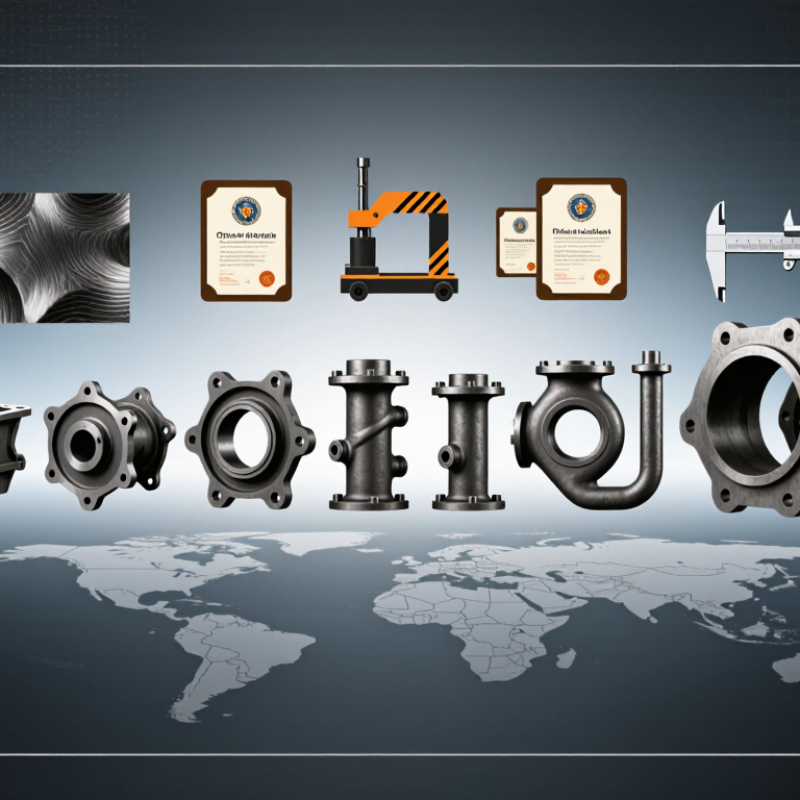
What Is Graphite Iron and Why Is It Used?
Graphite iron is a cast iron family containing carbon in graphite form. Its structure may include flakes, compacted particles, or rounded nodules. Each form changes strength, machinability, vibration control, and thermal behavior. Gray iron uses graphite flakes, while ductile iron uses rounded graphite nodules.
Manufacturers use graphite iron because it absorbs vibration effectively. This helps reduce noise in machine bases, housings, and engine components. It also conducts heat well, supporting brake parts, pump bodies, and industrial tooling. Many grades machine smoothly and offer practical wear resistance. Complex shapes can be cast with fewer assembly steps. That can reduce material waste and production time.
The graphite shape must match the application. Flakes improve damping but can reduce tensile strength. Nodules provide better toughness, yet they demand tighter melting and quality controls. It is not magic. Poor chemistry, shrinkage, or uneven cooling can cause hidden defects. Experienced suppliers should provide chemical analysis, mechanical test results, dimensional reports, and batch traceability. Buyers should also confirm the applicable casting standard, heat treatment, surface condition, and inspection method. In real projects, selecting the cheapest grade can become expensive after machining or field failure. A careful technical review remains essential, even when the component looks simple.
10 Best Graphite Iron Suppliers for Global Buyers: What Is Graphite Iron and Why Is It Used?
Minimum tensile strength of gray cast iron classes defined by ASTM A48/A48M
Graphite iron is cast iron in which carbon exists partly as graphite. In gray cast iron, the graphite forms flakes that help absorb vibration, improve machinability, and provide good thermal conductivity. These characteristics make it widely used for machine bases, engine blocks, brake components, housings, pipes, and other industrial parts.
The chart shows the minimum tensile strength associated with ASTM A48/A48M gray iron classes. Class numbers are specified in ksi; the values shown here are converted to megapascals using 1 ksi = 6.89476 MPa. Actual performance depends on casting design, section thickness, chemistry, heat treatment, and inspection requirements.
How to Evaluate Graphite Iron Suppliers
Evaluating graphite iron suppliers requires more than comparing quoted prices. Start by checking process control, material grades, and production capacity. Request recent test reports for tensile strength, hardness, graphite structure, and dimensional accuracy. Reports should identify testing methods, sample locations, and test dates. Vague certificates are warning signs. Ask for traceable heat numbers.
A capable supplier should explain its melting, inoculation, molding, machining, and final inspection procedures. Request a sample inspection plan. It should include visual checks, gauge records, surface defects, and tolerance results. For critical castings, confirm nondestructive testing options and calibration records. Review monthly capacity, lead times, packaging, and replacement procedures. A factory that answers quickly but avoids evidence deserves caution. Documentation matters.
Commercial reliability also needs attention. Compare payment terms, tooling ownership, minimum order quantities, and shipping responsibilities in writing. Check whether engineering staff can review drawings before production. Small pilot orders can reveal porosity, warping, inconsistent machining, or weak communication. Do not judge quality from one perfect sample. Repeated batches tell more. I would also inspect corrective-action reports, even when they look uncomfortable. No supplier has zero mistakes; hiding them is the bigger risk. Audits can still be incomplete when prepared areas receive special attention. Independent inspection may cost more, but it can prevent expensive rework. Choose evidence over confident promises.
10 Best Graphite Iron Suppliers for Global Buyers - How to Evaluate Graphite Iron Suppliers
| Rank | Supplier Profile | Primary Supply Region | Typical Material Grades | Core Manufacturing Capability | Typical Order Volume | Estimated Lead Time | Common Quality Standards | Export Readiness | Evaluation Score |
| 1 | Supplier Profile A | East Asia | Ductile iron grades; gray iron grades | Automated sand casting, CNC machining, pattern development | 1–100 metric tons | 35–55 days | ISO 9001; chemical and mechanical testing; dimensional inspection | High | 9.2/10 |
| 2 | Supplier Profile B | South Asia | Ductile iron grades; compacted graphite iron | Resin sand casting, heat treatment, rough machining | 5–150 metric tons | 40–65 days | ISO 9001; EN 1563; ultrasonic and radiographic testing available | High | 9.0/10 |
| 3 | Supplier Profile C | Central Europe | EN-GJS ductile iron; EN-GJL gray iron | High-precision molding, machining, prototyping | 0.5–50 metric tons | 30–50 days | ISO 9001; ISO 14001; EN 10204 inspection documentation | High | 8.9/10 |
| 4 | Supplier Profile D | North America | ASTM ductile iron; gray iron; austempered ductile iron | Induction melting, shell molding, heat treatment | 1–75 metric tons | 35–60 days | ISO 9001; ASTM specifications; PPAP support | High | 8.7/10 |
| 5 | Supplier Profile E | Southeast Asia | Ductile iron; gray iron; wear-resistant iron | Green sand casting, machining, coating and assembly | 5–120 metric tons | 45–70 days | ISO 9001; material traceability; pressure testing | Medium-High | 8.5/10 |
| 6 | Supplier Profile F | Eastern Europe | EN-GJS ductile iron; gray iron; alloyed iron | Automatic molding, CNC machining, surface finishing | 1–80 metric tons | 40–65 days | ISO 9001; ISO 14001; dimensional and hardness testing | Medium-High | 8.3/10 |
| 7 | Supplier Profile G | South America | Ductile iron; gray iron; centrifugal iron pipe grades | Sand casting, centrifugal casting, machining | 10–200 metric tons | 50–80 days | ISO 9001; ISO 2531 for applicable pipe products; pressure testing | Medium | 8.1/10 |
| 8 | Supplier Profile H | South Asia | Gray iron; ductile iron; heat-resistant iron | Manual and automatic molding, machining, painting | 5–100 metric tons | 45–75 days | ISO 9001; chemical analysis; tensile and hardness testing | Medium | 7.9/10 |
| 9 | Supplier Profile I | Mediterranean Region | EN-GJL gray iron; EN-GJS ductile iron | Sand casting, low-volume tooling, finishing | 0.5–40 metric tons | 35–60 days | ISO 9001; EN 10204; visual and dimensional inspection | Medium | 7.8/10 |
| 10 | Supplier Profile J | Middle East and North Africa | Gray iron; ductile iron; general engineering cast iron | Green sand casting, fabrication, basic machining | 10–150 metric tons | 50–85 days | ISO 9001; chemical analysis; dimensional and pressure testing | Developing | 7.5/10 |
| Evaluation criteria: material-grade coverage, casting and machining capability, quality-control documentation, order flexibility, estimated production lead time, export readiness, and technical support. Lead times and order volumes are indicative industry benchmarks and should be confirmed through quotations, sample inspection, and contract documentation. |
Comparing Product Quality, Standards, and Production Capacity
The best graphite iron suppliers are not judged by catalog photographs alone. Global buyers should compare metallurgical control, applicable standards, and repeatable production capacity. Gray iron should show consistent graphite flakes, hardness, tensile strength, and wall thickness. Ductile iron requires verified nodularity, elongation, and matrix structure. A polished test report is useful, but regular sampling matters more.
Ask suppliers which standards they follow, such as ASTM A48, ASTM A536, EN 1561, or EN 1563. Requirements must match the final component, not merely the factory’s usual process. Check whether the supplier operates an accredited laboratory and preserves heat numbers through machining. Inspectors should review spectrometer results, tensile coupons, hardness readings, and dimensional records. Small details matter.
Production capacity needs practical evidence. Compare furnace size, molding method, machining cells, monthly output, and peak-season lead times. A large stated tonnage may hide subcontracting or unstable quality. Request recent production records and a controlled sample batch. Visit the foundry if the order is critical. Look for clean ladles, labeled patterns, protected test areas, and trained operators. Standards can be met on paper. Consistency is harder. One weakness remains: many comparisons rely on supplier claims, while rejection rates and corrective-action history stay undisclosed. Ask for those figures before choosing.

