We use our own and third-party cookies to improve our services. If you continue browsing, we will consider that you accept this use. Read More

OK

English-US
  • Spanish-Latin America
  • Japanese-JP
  • Chinese
  • Europe
  • Português-BR

Tech Support

(888) 598-9901
Hours: Mon-Fri 8AM-8PM EST

E-mail

nep-usa@site_ea168614-f5f4-4298-bd5b-880b4cf8d99d

China Top Inspiron 15 Xcmrd Battery Manufacturer

Choosing a reliable China manufacturer for an Inspiron 15 Xcmrd Battery requires more than comparing online prices. Compatibility must be checked through the exact model code, voltage, capacity, connector position, and battery dimensions. A professional supplier should provide clear datasheets, production photographs, sample testing, and traceable quality records. These details matter when a battery must fit beneath a laptop’s slim rear cover without pressure or movement.

Isidor Buchmann, founder of Cadex Electronics and Battery University, once wrote, “A battery is like a human being; it needs to be treated well.” His observation reflects practical battery care and responsible manufacturing. A capable factory should use tested lithium-ion cells, controlled assembly rooms, and protection circuits against overcharge, over-discharge, overheating, and short circuits. It should also perform cycle testing, capacity verification, insulation checks, and shipment inspections before delivery.

Real experience still matters. Engineers can test an Inspiron 15 Xcmrd Battery inside a working laptop, measuring charging time, operating temperature, and runtime under office workloads. A good result should be repeatable, not based on one impressive sample. Some suppliers may advertise higher capacity than the original battery, but this claim deserves careful review. Bigger numbers are not always better.

There is room for uncertainty. Laptop usage, age, software settings, and storage conditions can change performance. Therefore, the strongest Chinese manufacturer combines transparent specifications, responsive technical support, stable production, and compliance with applicable transport and product safety requirements. This approach protects buyers from avoidable failures and supports dependable long-term use.
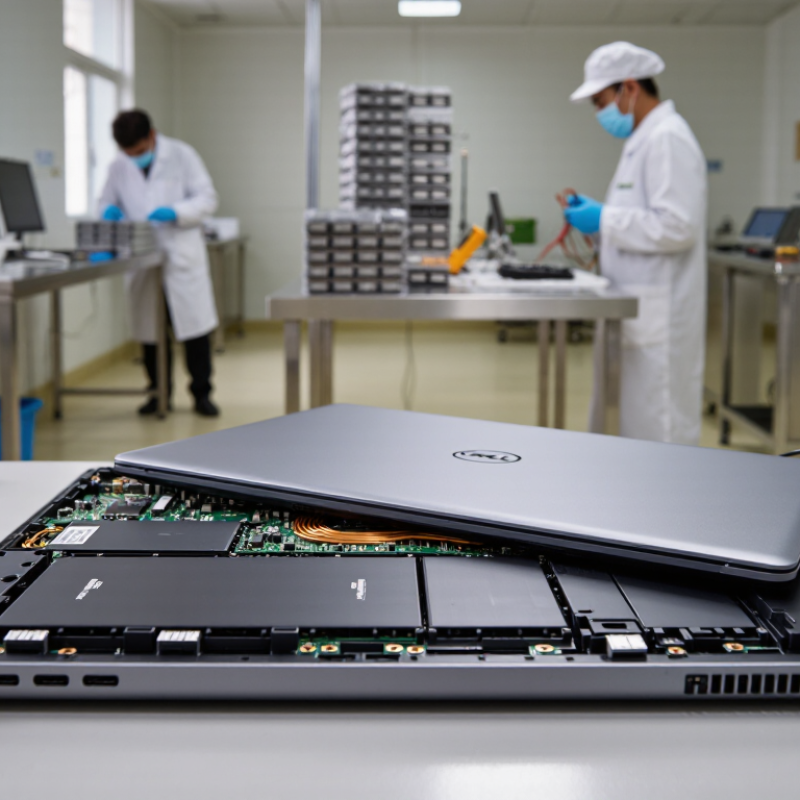
China Top Inspiron 15 Xcmrd Battery Manufacturer

Inspiron 15 XCMRD Battery: Overview and Compatibility

The 15 XCMRD battery is a replacement power module for a specific 15-inch notebook series. It commonly uses lithium-ion cells and a built-in protection circuit.

Voltage, capacity, connector position, and battery dimensions must match the original unit. Shape alone is not enough.

Experienced technicians compare the battery label with the computer’s service information before installation. They check the connector carefully, especially its pin arrangement and cable direction.

A loose connection may cause charging errors or sudden shutdowns. Some compatible batteries offer similar capacity, but actual runtime depends on screen brightness, software use, and battery age.

Small differences matter.

A reliable China-based manufacturer should control cell quality, welding strength, insulation, and protection-board performance. Factory testing may include charging, discharging, temperature checks, and repeated cycle testing.

These steps support safer and more consistent operation. Still, no replacement battery performs perfectly in every device. Real-world results can vary.

That detail is easy to miss.

Before ordering, confirm the full model code, rated voltage, connector style, and physical measurements. Do not rely only on product photos.

During installation, power off the notebook and avoid bending the battery casing. After fitting, allow the system to recognize the battery and observe its first charging cycle.

If the battery becomes unusually hot, stop using it and request professional inspection.

Key Specifications of the Inspiron 15 XCMRD Battery

A China-based battery manufacturer for the XCMRD series should define specifications clearly. The common configuration uses lithium-ion chemistry, a nominal voltage of 11.1V, and a capacity near 4400mAh. Its energy rating is approximately 49Wh.

These figures support everyday office work, web browsing, and light media use. A six-cell structure can provide balanced discharge performance when the laptop is used away from a charger. The pack should include overcharge, over-discharge, overcurrent, and temperature protection. Safety matters.

Physical compatibility is equally important. The battery must match the original connector, housing shape, mounting points, and firmware requirements. A reliable manufacturer checks these details through sample fitting and repeated charge-discharge testing. In production, cell matching also helps reduce uneven aging.

Real capacity may differ slightly after shipping, storage, or repeated use. This is easy to overlook. Battery life also depends on screen brightness, processor load, wireless activity, and operating temperature. Quality control should record voltage, capacity, internal resistance, and protection-board response for every production batch. I would still recommend verifying the label before purchase, because similar model codes can hide different revisions. Such careful verification reflects practical manufacturing experience and improves replacement reliability.

Inspiron 15 XCMRD Battery – Key Specifications

Rated electrical characteristics of a typical 6-cell lithium-ion battery configuration.

The battery is commonly specified as a 6-cell lithium-ion pack with a nominal voltage of 11.1 V and a rated capacity of 4,400 mAh. Its approximate energy rating is 48.8 Wh, calculated from voltage multiplied by ampere-hours. Actual runtime depends on system workload, battery condition, power settings, and operating temperature.

How Chinese Manufacturers Produce XCMRD Replacement Batteries

Chinese manufacturers produce XCMRD replacement batteries through a controlled, repeatable process. Engineers begin by checking the original battery’s voltage, capacity, dimensions, connector position, and communication protocol. These details guide the selection of compatible lithium-ion cells and protection components. A battery can fit perfectly and still perform poorly if its firmware or output behavior is incorrect.

Production starts with cell testing. Each cell is measured for voltage, internal resistance, and capacity before assembly. Matched cells help reduce imbalance during charging and daily use. Technicians then use spot welding to connect nickel strips, avoiding excessive heat near the cell surface.

The battery management circuit is installed with overcharge, over-discharge, short-circuit, and temperature protection. The casing is checked against the XCMRD structure, including screw points and cable clearance.

Testing is practical and strict. Samples undergo charging cycles, load testing, connector checks, and simulated notebook operation. Workers record serial data for traceability. They also inspect insulation, labels, and sealing by hand. Small defects matter.

Capacity claims require honesty. Actual runtime depends on system load, battery age, and operating temperature, so factory figures should not promise identical results in every device. Some manufacturers still improve their process after discovering uneven capacity or loose connector tolerances. That reflection is useful. It encourages better sampling, clearer specifications, and safer replacement battery production.

Quality Standards and Safety Features for XCMRD Batteries

XCMRD Battery Quality Standards and Safety Features

A dependable XCMRD battery begins with verified cell quality, not attractive packaging. The International Energy Agency reported that global lithium-ion battery demand exceeded 750 GWh in 2023. This scale increases pressure on manufacturers to control materials, testing, and traceability. Each battery pack should use matched cells, insulated nickel tabs, and a stable separator. A protection circuit must manage overcharge, over-discharge, overcurrent, and abnormal temperature. These details matter during charging beside a warm laptop or inside a crowded work bag.

Reliable manufacturers should test XCMRD batteries against IEC 62133-2 and UN 38.3 requirements. UN 38.3 includes eight transport-safety tests, including vibration, shock, altitude, and external short circuit. Production checks should also include capacity grading, charging-cycle verification, and aging inspection. The IATA 2025 battery guidance keeps spare lithium batteries in carry-on baggage, reflecting the importance of damage prevention. However, compliance papers alone cannot prove every production batch is safe. Certificates can age. Factory records need regular review, random sampling, and clear lot identification. That part is often underestimated.

Tips: Check the rated voltage, capacity, production date, and test documents. Stop using a pack with swelling, heat, odor, or unstable charging. Avoid crushed housings and unapproved chargers. A safety label is useful, but careful daily handling still matters. The weak point may be the charger, not the battery.

China Top Inspiron 15 XCMRD Battery Manufacturer - Quality Standards and Safety Features for XCMRD Batteries

Quality or Safety Dimension Typical Technical Requirement Relevant Standard or Method Verification Evidence
Battery chemistry Rechargeable lithium-ion cells with a battery-management system; the exact cell format and chemistry must match the approved design. Approved design specification and cell datasheet Bill of materials, cell traceability records, and incoming inspection reports
Rated voltage and capacity Voltage, capacity, and energy rating must be printed on the pack label and must correspond to the approved battery configuration. Energy is calculated as voltage × ampere-hours. Electrical specification and capacity test procedure Label inspection, charge-discharge test data, and sampling records
Overcharge protection The protection circuit should disconnect or limit charging when the cell voltage reaches the approved upper-voltage threshold. Battery-management-system protection test Protection threshold records and functional test results
Over-discharge protection The pack should stop discharge before cell voltage falls below the approved lower-voltage limit. Battery-management-system protection test Cut-off voltage records and recovery-function test results
Overcurrent and short-circuit protection The protection circuit should interrupt abnormal current conditions and prevent sustained short-circuit operation. Pack protection and abnormal-condition testing Trip-time records, reset behavior, and visual inspection
Temperature monitoring Temperature sensors and control logic should limit charging or discharging when the pack exceeds its approved operating range. Thermal protection and operating-temperature tests Sensor response records and high/low-temperature test results
Electrical safety testing The battery design should be assessed for electrical, mechanical, and abuse-related safety risks before market release. IEC 62133-2:2017+A1:2021, where applicable Test report issued by a competent laboratory and design documentation
Transport safety Lithium-ion batteries intended for transport should pass the applicable United Nations transport tests before shipment. UN Manual of Tests and Criteria, Part III, Sub-section 38.3 UN 38.3 test summary and shipment documentation
Cell-level safety Cells should be sourced with documented safety testing, consistent production controls, and traceable lot information. IEC 62133-2 or other applicable cell-safety requirements Cell certificates, lot records, and supplier qualification documents
Mechanical integrity The enclosure, tabs, connectors, insulation, and internal supports should resist normal vibration, handling, and installation stresses. Approved mechanical design and applicable safety testing Dimensional inspection, connector checks, and vibration or impact test records
Charging compatibility The battery must be compatible with the specified charging system, connector, communication protocol, and charging limits. System compatibility and charge-cycle testing Compatibility test records, communication checks, and charger verification
Capacity retention Capacity should be monitored over repeated charge-discharge cycles according to the approved product specification. Defined cycle-life test at controlled temperature and load Cycle-life curves, initial capacity data, and end-of-test results
Production quality control Each production lot should undergo appearance, dimensional, electrical, connector, insulation, and functional checks. Documented incoming, in-process, and final inspection plans Inspection reports, sampling plans, nonconformance records, and corrective-action reports
Marking and traceability The pack should identify model information, electrical ratings, production or lot code, warnings, and applicable recycling markings. Applicable product-labeling and transport-labeling requirements Label artwork approval, barcode records, and lot-traceability audit

Note: Applicable standards, ratings, and test limits depend on the final battery design, cell configuration, destination market, and transport method. Compliance should be confirmed through current technical documentation and competent laboratory reports.

How to Choose a Reliable China-Based XCMRD Battery Manufacturer

How to Choose a Reliable China-Based XCMRD Battery Manufacturer

Choosing an XCMRD battery manufacturer requires more than comparing quotations. The International Energy Agency reported that global battery demand exceeded 750 GWh in 2023. This rapid growth increases pressure on cells, materials, and quality controls. Ask for cell origin, production records, and batch traceability. A dependable factory should provide IEC 62133-2 test evidence, UN 38.3 transport testing, and RoHS documentation. These documents support safety decisions, but they do not replace independent verification. Request samples from the same production line. Check voltage stability, connector fit, capacity, charging temperature, and protection-board response. Small details matter.

Tips: Audit the factory remotely or in person. Review ISO 9001 procedures, aging-test records, and defect handling. Confirm whether the stated capacity reflects tested capacity, not marketing capacity. Ask for a written warranty with measurable terms. Also, check how rejected cells are controlled. A low price can hide inconsistent materials. It often does.

The IEA also notes that battery supply chains remain highly concentrated, making supplier resilience important. Ask whether the manufacturer has backup cell sources, stable component inventory, and documented change-control procedures. Verify production capacity through recent orders, not only factory photographs. A pre-shipment inspection can catch labeling, swelling, or connector issues. However, one inspection is not enough. Quality may drift between batches. Keep retained samples and compare future deliveries against approved specifications. No checklist is perfect. Careful buyers still revisit their assumptions.

Get in touch

Our mission is to develop cutting-edge clean energy technology and provide next-generation solar inverters.

Phone

(888) 598-9901

E-mail

nep-usa@site_ea168614-f5f4-4298-bd5b-880b4cf8d99d