How to Lower Your Power Bill?
How to Lower Your Power Bill? begins with a simple question: where does each kilowatt-hour go?
The U.S. Energy Information Administration’s Residential Energy Consumption Survey shows that household electricity use remains substantial, although consumption differs by climate, home size, and equipment. The U.S. Department of Energy also identifies heating and cooling as major household energy expenses. These figures matter, but averages can hide your actual problem. A drafty bedroom, an aging refrigerator, or a water heater quietly working at midnight may be responsible for a surprising share of your power bill.
Energy-efficiency specialist Steven Nadel has said, “Energy efficiency is the cheapest way to meet our energy needs.” His point is practical. Before buying expensive technology, inspect the energy you already waste. Set the thermostat carefully, seal visible gaps around doors, wash clothes with cold water, and unplug rarely used devices. A small watt meter can reveal an overlooked load behind a desk or television.
The International Energy Agency’s Energy Efficiency 2023 report emphasizes efficiency as a key tool for reducing energy demand and household costs. Still, not every recommendation works everywhere. Time-of-use pricing can reward evening changes, but it can also punish households with inflexible schedules. Utility tariffs should be checked before changing routines.
This guide combines verified research with realistic household actions. Some savings will be modest. That is worth admitting. A lower power bill usually comes from several small corrections, repeated consistently, rather than one dramatic purchase.
Measure Your Baseline Against U.S. EIA Household Electricity Data
How to Lower Your Power Bill?
Measure Your Baseline Against U.S. EIA Household Electricity Data
Before cutting usage, measure your household’s baseline. Record each monthly kilowatt-hour reading for at least twelve months. Include the bill amount, billing dates, and unusual events, such as guests or extreme weather.
Then compare your results with household electricity data from the U.S. Energy Information Administration. EIA reports residential consumption and spending patterns across regions and household types. Match your comparison carefully. A small apartment should not be judged against a large detached home. Climate also matters. Air conditioning can change summer usage dramatically, while electric heating raises winter demand.
Use matching months.
A practical comparison starts with average monthly kilowatt-hours, not dollars alone. Electricity rates differ by location, so spending can mislead you. If your usage exceeds a similar EIA benchmark, inspect your largest loads. A meter reading may reveal an aging refrigerator, frequent electric heating, or equipment running overnight. I once blamed lighting for a high bill, but the real cause was a poorly adjusted heating schedule. My first estimate was wrong.
EIA figures are useful reference points, not personal targets. Survey methods, reporting periods, and household conditions can differ. Treat the data as a starting question: Why is my home above or below this range? Recheck after one change, such as lowering standby loads or adjusting thermostat settings. Keep the result measurable.
Cut Heating and Cooling Costs, Which Use Nearly 50% of Home Energy (DOE)
How to Lower Your Power Bill?
Heating and cooling can consume nearly half of a home’s energy, according to the U.S. Department of Energy. That makes temperature control the most practical place to begin. A slightly lower winter setting or higher summer setting can reduce system runtime without making rooms uncomfortable. Try adjusting the thermostat by one degree for several days, then check your bill and indoor comfort.
Seal noticeable gaps around doors, windows, and duct connections. A cool draft near your ankles often signals wasted heating. In summer, close blinds before afternoon sunlight turns the living room into a greenhouse. Replace a dirty air filter regularly, because restricted airflow makes the system work harder. Small maintenance tasks matter.
I once assumed a newer thermostat would solve everything. It did not. Poor insulation and open curtains were the larger problems. That mistake is worth remembering. Start with an energy audit or a professional inspection when possible. An expert can identify uneven airflow, duct leakage, weak insulation, or equipment that is oversized. Do not guess blindly.
Ceiling fans may improve comfort, but they do not cool empty rooms. Turn them off when nobody is present. Keep vents clear of furniture and rugs. If one bedroom remains hot while another feels cold, record the temperatures at different times. Those details can help a technician diagnose the system more accurately and prevent unnecessary repairs.
Switch to LEDs, Which Use at Least 75% Less Energy (U.S. DOE)
How to Lower Your Power Bill?
Switching to LED lighting is one of the simplest household efficiency upgrades. The U.S. Department of Energy reports that LEDs use at least 75% less energy than incandescent bulbs. They can also last up to 25 times longer. That difference matters in rooms used every evening, such as kitchens, hallways, and home offices.
Consider a 60-watt incandescent bulb used for three hours daily. It consumes about 65.7 kilowatt-hours yearly. A comparable 9-watt LED uses roughly 9.9 kilowatt-hours. At an electricity rate of $0.16 per kilowatt-hour, the annual operating cost falls from about $10.51 to $1.58 per bulb. The U.S. Energy Information Administration reported an average residential electricity price of about 16 cents per kilowatt-hour in 2023, though local rates vary.
Change the most-used bulbs first. Check the fixture’s brightness, color temperature, and dimmer compatibility. A warm 2700K bulb can feel less harsh in a bedroom. Small details matter. I would not replace every working bulb immediately, because disposal and purchase costs affect the payback period. A rough calculation can also miss delivery charges and seasonal usage. Track one room for a month before expanding the upgrade.
Choose ENERGY STAR Appliances for Typical Savings of 10–50% (EPA)
How to Lower Your Power Bill?
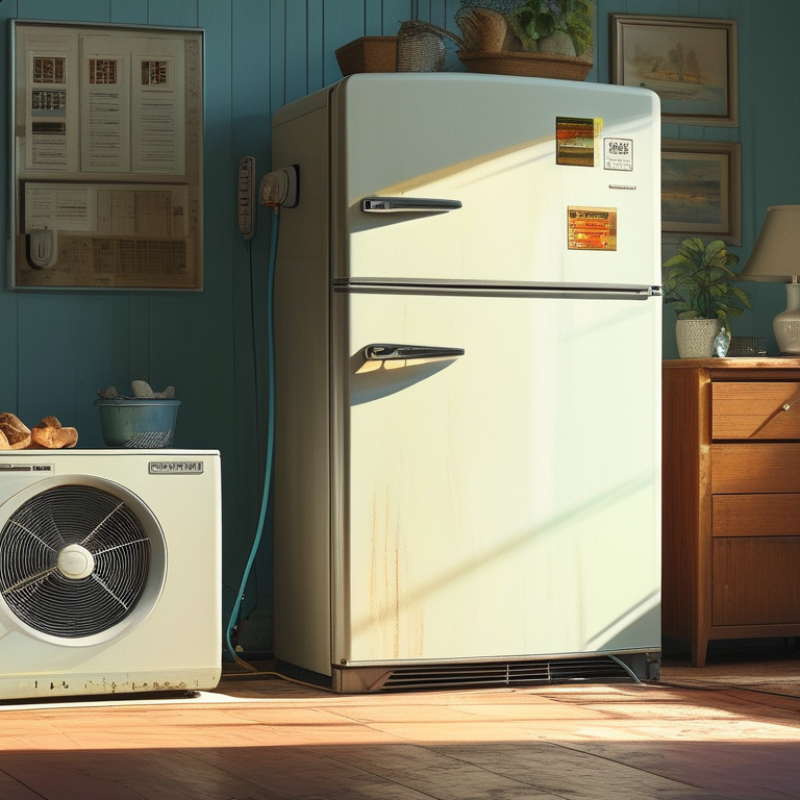
Choosing ENERGY STAR appliances can reduce household electricity use without changing daily routines. The U.S. Environmental Protection Agency reports that certified appliances typically use 10–50% less energy than standard models, depending on the product category. That range is broad, and it matters. A refrigerator, washing machine, or room air conditioner may deliver different savings.
Look at the yellow EnergyGuide label before buying. It estimates annual electricity consumption and operating cost under standard conditions. The U.S. Department of Energy explains that actual costs vary with local electricity rates, household behavior, and usage frequency. A high-efficiency washer may save more when used often, especially with warm-water cycles. An efficient refrigerator can reduce continuous background demand because it runs all day.
The International Energy Agency identifies appliance efficiency as an important path for lowering residential energy demand. Still, the label is not magic. An oversized appliance can waste energy, even when certified. I also check standby settings, ventilation space, and maintenance needs. Dirty filters and blocked vents quietly reduce performance. Savings may look smaller during the first month, especially after a major purchase. Reviewing monthly kilowatt-hours gives a more honest measure than relying only on advertised percentages. EPA guidance also recommends comparing models within the same size and function, rather than choosing the cheapest purchase price.
How to Lower Your Power Bill?
Choose ENERGY STAR appliances for typical energy savings of 10–50%, according to the U.S. Environmental Protection Agency.
The values show representative points within the EPA’s typical 10–50% savings range. Actual savings vary by appliance type, usage, local electricity rates, and the efficiency of the appliance being replaced.
Source: U.S. Environmental Protection Agency ENERGY STAR
Shift High-Load Tasks to Off-Peak Hours Using Utility Time-of-Use Rates
How to Lower Your Power Bill?
Time-of-use pricing rewards households that use electricity when grid demand is lower. These periods often occur late morning or overnight, but schedules vary by utility. Check the rate sheet before changing routines. The U.S. Energy Information Administration’s 2020 Residential Energy Consumption Survey reports that space heating represented about 43% of household energy use. Water heating and air conditioning can also create expensive peaks.
Move laundry, dishwashing, and water heating into the cheapest period. Run the dishwasher after bedtime, if rates fall then. Preheat water earlier, but avoid running several high-load appliances together. Smart thermostats can help, though comfort should remain the boundary. The U.S. Department of Energy’s 2023 Virtual Power Plants report estimates that 80–160 gigawatts of flexible demand could be available by 2030. Small shifts help.
Research supports the strategy, but savings are not automatic. Track one month before and after. Photograph the meter. Record each appliance and its start time. I still miss cheap windows when work runs late. That flaw matters. Use alerts, then review the next bill in kilowatt-hours and currency. If the difference is tiny, shift only the easiest loads. Check whether fixed charges or seasonal pricing weaken the result.