- Spanish-Latin America
- Japanese-JP
- Chinese
- Europe
- Português-BR

Tech Support
(888) 598-9901
Hours: Mon-Fri 8AM-8PM EST
nep-usa@site_ea168614-f5f4-4298-bd5b-880b4cf8d99d
How to Choose the Right Run Capacitor for Your Needs?
Choosing the right Run Capacitor is a small decision with major consequences for motor performance, efficiency, and service life. A mismatched capacitor can leave a condenser humming, overheating, or drawing unstable current. Sometimes, the failure begins with one overlooked label.
Industry research supports the importance of this component. Grand View Research and Fortune Business Insights both identify rising demand for reliable capacitors across HVAC, industrial, and appliance applications. The U.S. Department of Energy also highlights motor-system efficiency as a practical path toward reducing electricity use. These reports do not make selection simple. They show why accuracy matters.
HVAC educator Bryan Orr explains the electrical principle clearly: “A capacitor creates a phase shift; it does not simply provide extra starting power.” That distinction matters when choosing a Run Capacitor for continuous motor operation. Check the motor nameplate first. Match the rated microfarads exactly. Select equal or higher voltage, never lower. Confirm tolerance, frequency, operating temperature, terminal layout, and physical clearance. A 40/5 µF dual capacitor is not interchangeable with a 45/5 µF model merely because it fits the bracket.
Small details decide the outcome.
IEC 60252-1 provides an important reference for AC motor capacitors, while manufacturer specifications remain the final authority. A neat selection checklist can still fail in the field. Heat, vibration, aging wiring, and poor airflow may create symptoms that look like capacitor failure. The safest choice combines measured capacitance, nameplate data, documented application experience, and qualified technical judgment.
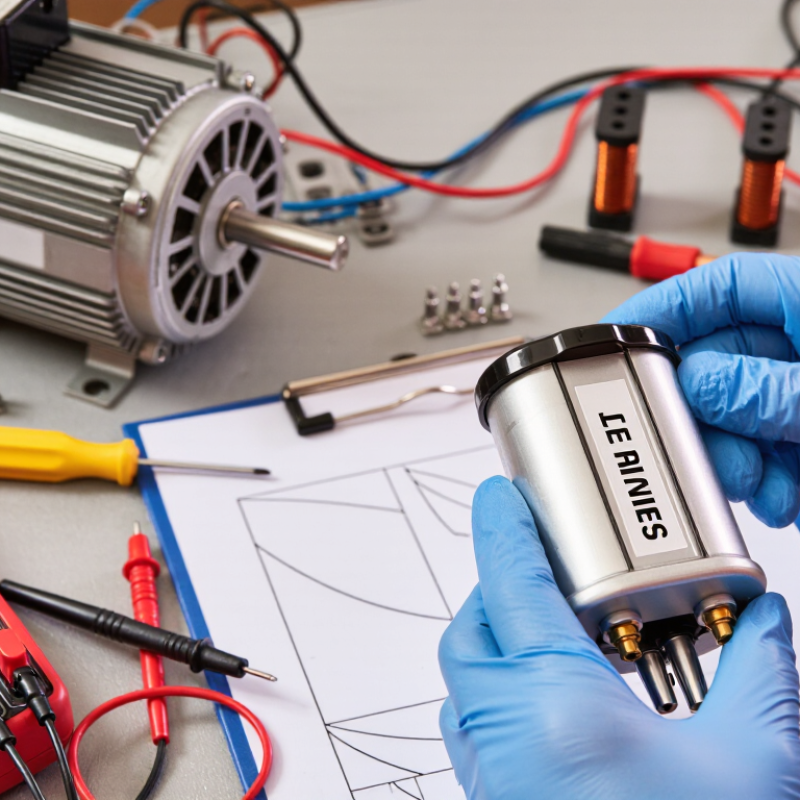
What a Run Capacitor Does in an Electrical System
How to Choose the Right Run Capacitor for Your Needs?
A run capacitor stays connected while a single-phase motor operates. It shifts current in the auxiliary winding. This phase difference helps create a rotating magnetic field. The motor then runs with smoother torque and improved electrical efficiency. It may also reduce humming, excess heat, and unnecessary current draw.
The correct capacitance matters. Too little capacitance can weaken performance, while too much can overheat the winding.
Check the motor’s specified microfarad value before choosing a replacement. The voltage rating should match or exceed the original component. Use an AC motor-run capacitor, not a short-term start capacitor.
Frequency, tolerance, terminal arrangement, and physical dimensions also deserve attention. A part that fits poorly may suffer vibration or loose connections. Small details matter.
A practical inspection can reveal swelling, leaking oil, cracked insulation, or burnt terminals. Humming and difficult starting may also indicate capacitor trouble. Still, visual checks are not enough. A capacitor can look normal and test poorly.
Disconnect power, verify zero voltage, and follow proper discharge procedures before touching it. I would not rely on guesswork here. Measuring capacitance with a suitable meter provides stronger evidence, although a motor fault can produce similar symptoms. A qualified technician should confirm uncertain readings.
Get in touch
Our mission is to develop cutting-edge clean energy technology and provide next-generation solar inverters.
Phone
(888) 598-9901
nep-usa@site_ea168614-f5f4-4298-bd5b-880b4cf8d99d
