We use our own and third-party cookies to improve our services. If you continue browsing, we will consider that you accept this use. Read More

OK

English-US
  • Spanish-Latin America
  • Japanese-JP
  • Chinese
  • Europe
  • Português-BR

Tech Support

(888) 598-9901
Hours: Mon-Fri 8AM-8PM EST

E-mail

nep-usa@site_ea168614-f5f4-4298-bd5b-880b4cf8d99d

How to Choose the Best Power Electric Tools for Your Projects?

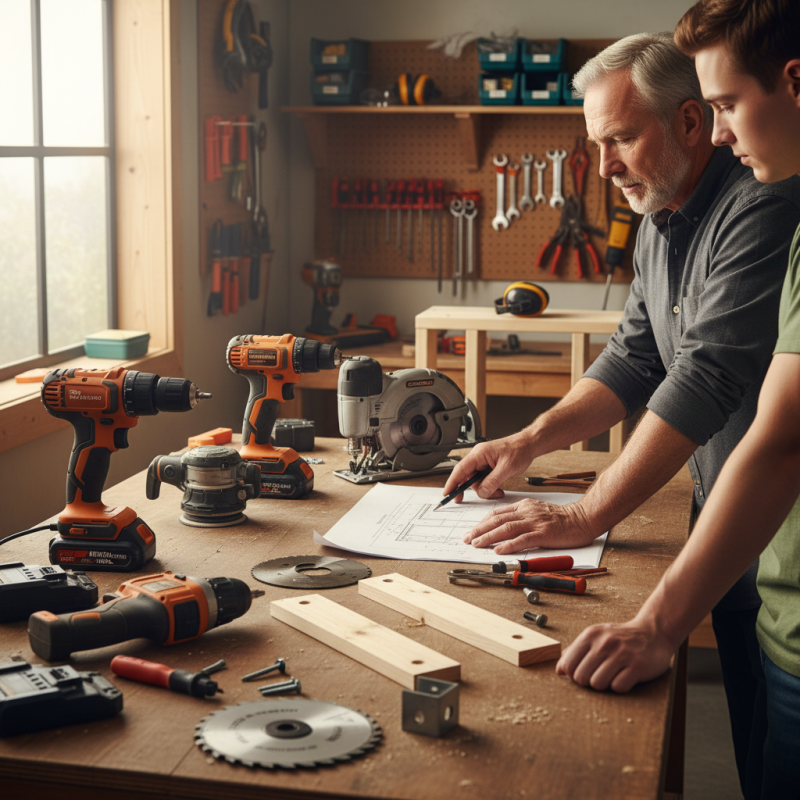
Choosing the right power electric tools can be overwhelming. With many options available, finding the best fit for your project is crucial. Expert James Miller, a leading authority in the power electric industry, emphasizes, “The right tools can make or break your project.”

Selecting power electric tools requires careful consideration of your specific needs. Think about the tasks you will perform. Each tool serves a unique purpose. For instance, a drill might work perfectly for one job but could be inadequate for another task requiring more power.

Mistakes are part of the learning curve. Many people rush to buy the latest models without understanding their requirements. Often, they find themselves with tools that do not meet their project demands. Reflecting on tool selection can save time and resources. Ultimately, a thoughtful choice in power electric tools leads to successful and efficient projects.
How to Choose the Best Power Electric Tools for Your Projects?

Understanding Different Types of Power Electric Tools Available

When selecting power electric tools, understanding the different types available is crucial. Power tools can be broadly categorized into corded and cordless options. Corded tools usually offer more power and consistent performance. However, they limit mobility. According to a report by the Freedonia Group, the demand for cordless tools has surged by 15% in recent years. Many users appreciate the flexibility cordless models provide, especially for larger projects.

Within each category, tools can further be classified based on functionality. Drills, saws, sanders, and grinders all serve specific purposes. For instance, a survey from the Power Tool Institute indicated that over 60% of professionals favor drills for versatility. Choosing the wrong tool can lead to inefficiencies. Using a heavy grinder for light sanding can be exhausting. It’s important to assess your project's needs carefully.

Additionally, safety features should not be overlooked. Many users fail to consider this aspect initially. Reports from consumer safety groups emphasize that nearly 30% of injuries are due to inappropriate tool selection. A tool with inadequate grip or safety guards can become a hazard. Take the time to explore these details. A well-chosen tool will enhance your efficiency and safety.
Assessing Your Project Requirements and Tool Specifications

How to Choose the Best Power Electric Tools for Your Projects?

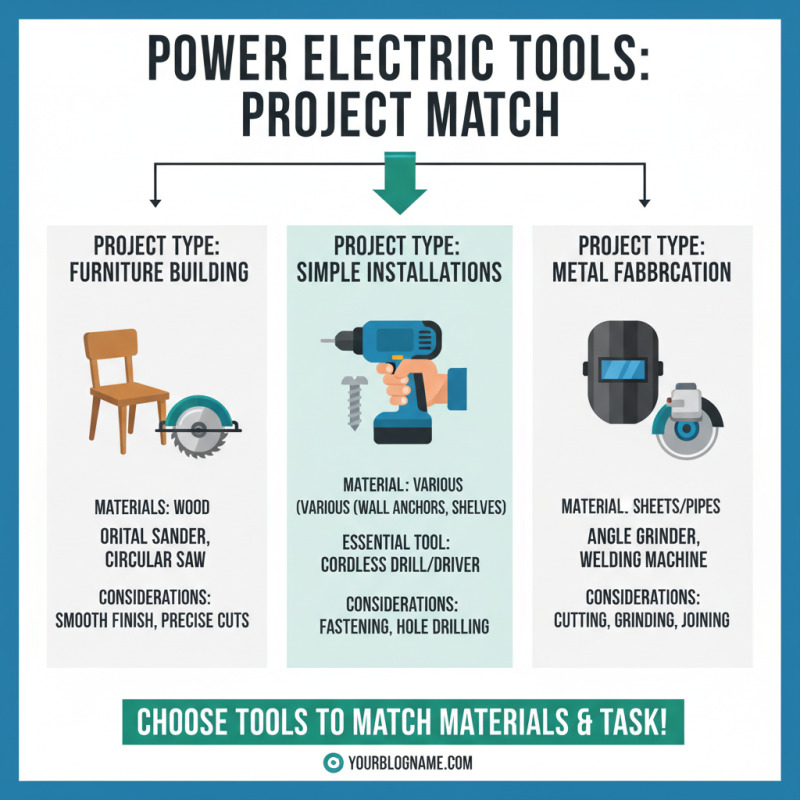
Choosing the right power electric tools starts with understanding your project needs. Each project is unique and demands different tools. Consider the materials you'll work with. Wood, metal, or plastic? The tool specifications should match these materials. For example, if you're building furniture, a sander might be essential. Meanwhile, a drill might suffice for simple installations.

Evaluate your experience level too. Beginners might struggle with complex tools. It's best to opt for user-friendly options. However, advanced users may require more specialized equipment. Reflect on past projects: Did you face challenges with certain tools? Learn from those experiences. The goal is to enhance your skills while choosing efficient tools. Keep in mind the weight and portability of tools. Heavy tools can lead to fatigue, impacting your work quality. Thus, select tools that meet both your project demands and your comfort level.

Evaluating Tool Performance Features: Power, Speed, and Efficiency

How to Choose the Best Power Electric Tools for Your Projects?

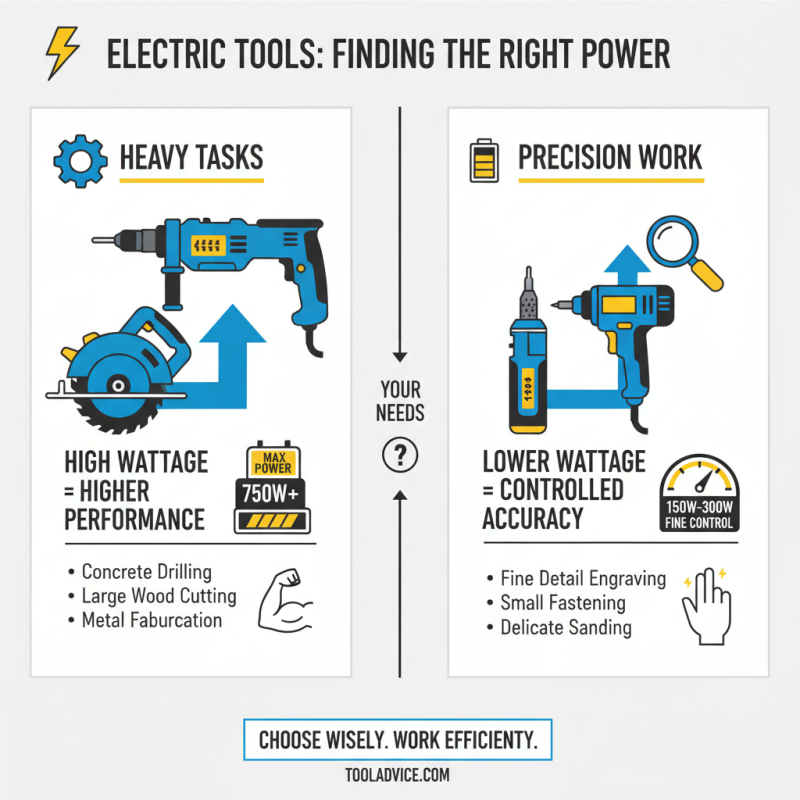
Choosing the right power electric tools hinges on evaluating key performance features. Power is a primary factor. Tools need sufficient wattage for heavy tasks. While higher power often means better performance, it’s crucial to assess your specific needs. Some projects may require less power but benefit from precision.

Speed is another critical feature to consider. Many tools offer variable speed settings. This flexibility allows you to tackle different tasks effectively. However, a tool that is too fast may create challenges, especially for beginners. It can lead to mistakes or accidents.

Efficiency also plays a vital role. Tools should not only perform well but do so without wasting energy. Look for options that maximize output while minimizing input. Yet, efficiency can sometimes come at a price—more advanced tools may be harder to operate. Reflecting on these factors will help ensure your choice aligns with your project goals.

Considering Safety Features and Ergonomic Design for Tools

When selecting power electric tools, safety features and ergonomic design are crucial. Always look for tools that have safety guards or automatic shut-off features. These can prevent accidents during operation. Ergonomics play a key role in comfort. Tools should fit your hand well and allow for a natural grip. A poorly designed tool can lead to fatigue and even injury over time.

Tips: Test the tool's weight. It should feel balanced when lifted. If it feels too heavy, consider a lighter model. Ensure you can reach all controls easily without straining. Pay attention to how tools fit into your routine. Small details matter. For instance, a trigger that’s hard to pull can lead to frustration, which can distract you while working.

Invest time in evaluating how a tool feels during use. A comfortable tool makes a long project manageable. Some tools may look durable but don’t feel right. A mismatch can lead to errors in your projects. Reflect on how a tool affects your workflow. Small adjustments to your toolkit can make a big difference.

How to Choose the Best Power Electric Tools for Your Projects?

Tool Type Safety Features Ergonomic Design Weight Price Range
Cordless Drill Automatic brake, Overload protection Lightweight, Soft grip handle 3 lbs $50 - $150
Table Saw Blade guard, Anti-kickback pawls Adjustable stand, Hand grips 50 lbs $300 - $800
Angle Grinder Rotating rear handle, Safety switch Compact design, Vibration control 4 lbs $40 - $120
Electric Sander Dust Collection, Soft start Ergonomic handle, Lightweight 2.5 lbs $30 - $100
Impact Wrench Overload protection, Safety lock Rubber grip, Compact design 5 lbs $70 - $200

Budgeting for Quality Tools vs. Cheap Alternatives in Your Selection

When selecting power electric tools, budgeting is crucial. Quality tools often require a higher upfront investment. However, they typically offer better performance and longevity. This means fewer replacements over time. Cheap alternatives may seem appealing, but they can lead to frustration and wasted money. A malfunctioning tool can derail projects and waste precious time.

Choosing the right tool can be confusing. It’s tempting to go for the lowest price. Yet, consider the materials and construction. Quality tools often use superior components. They can handle demanding jobs more efficiently. Think about your needs and the frequency of use. Are you a casual hobbyist or a serious DIYer? If you plan to use the tool regularly, investing in quality pays off.

Reflect on your priorities. Do you value performance over cost? Or is saving money more important? It’s a balancing act. Sometimes, the cheaper option can seem like a wise choice. But it can end up costing more in repairs or replacements. Consider real-life experiences from others. Their insights can provide valuable perspective. Quality tools may require more initial funds, but they can ultimately lead to satisfying results.

Comparison of Quality Tools vs. Cheap Alternatives

Get in touch

Our mission is to develop cutting-edge clean energy technology and provide next-generation solar inverters.

Phone

(888) 598-9901

E-mail

nep-usa@site_ea168614-f5f4-4298-bd5b-880b4cf8d99d